Last week I introduced everyone to the definition of location and view in relation to stage design. But let’s talk more about making sure your stage is legal in regards to these terms.
Last week I gave you this stage with the best 3 hits per target scoring. But does this stage meet these requirements from the definitions of short, medium, and long courses (see section 1.2.1): “Course design and construction must not require more than 8 scoring hits from any single location or view, nor allow a competitor to shoot all targets in the course of fire from any single location or view.”
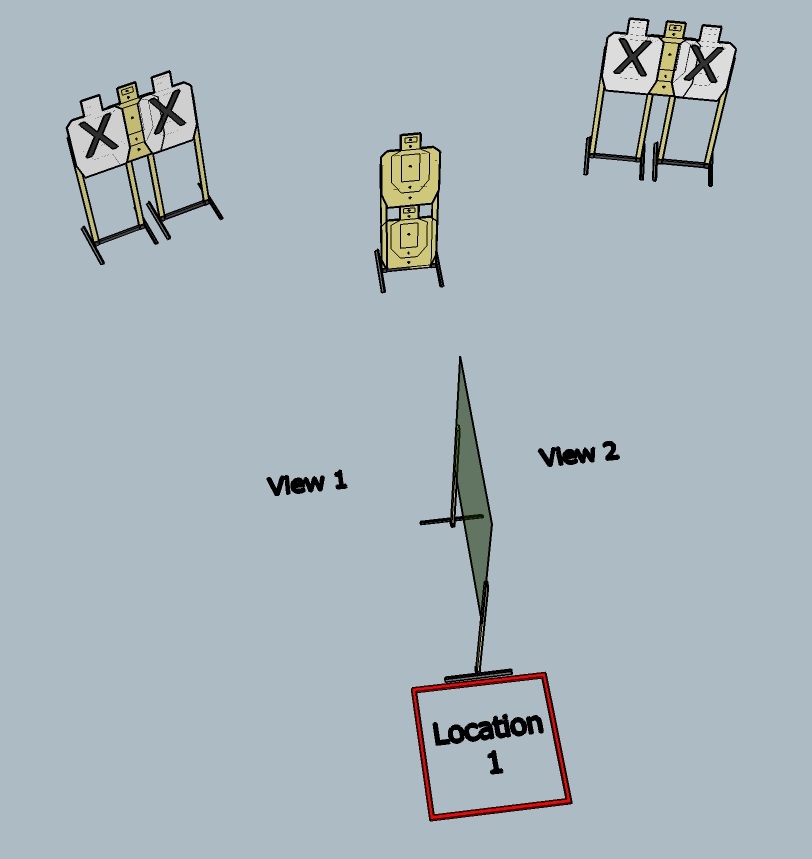
It doesn’t. Basically standing anywhere along the rear of the shooting area allows a competitor to engage all the targets from a single position. Just because 2 views are provided, it doesn’t make this a legal stage because all the targets can be engaged from a single location. Can the stage be fixed? Of course! It only takes a couple stacks of barrels.
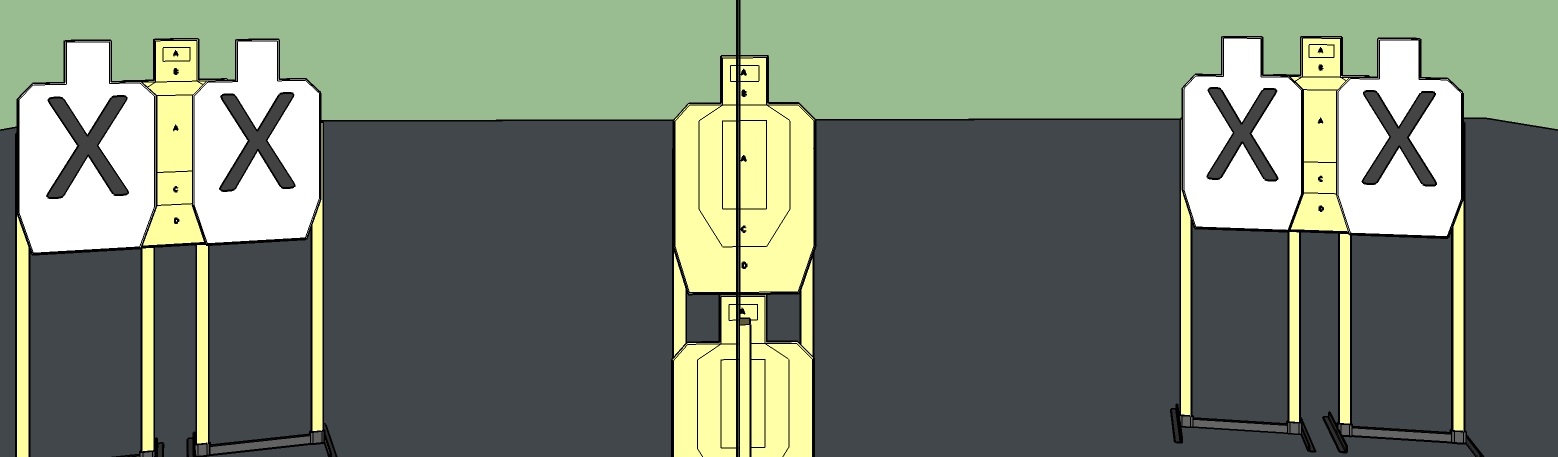
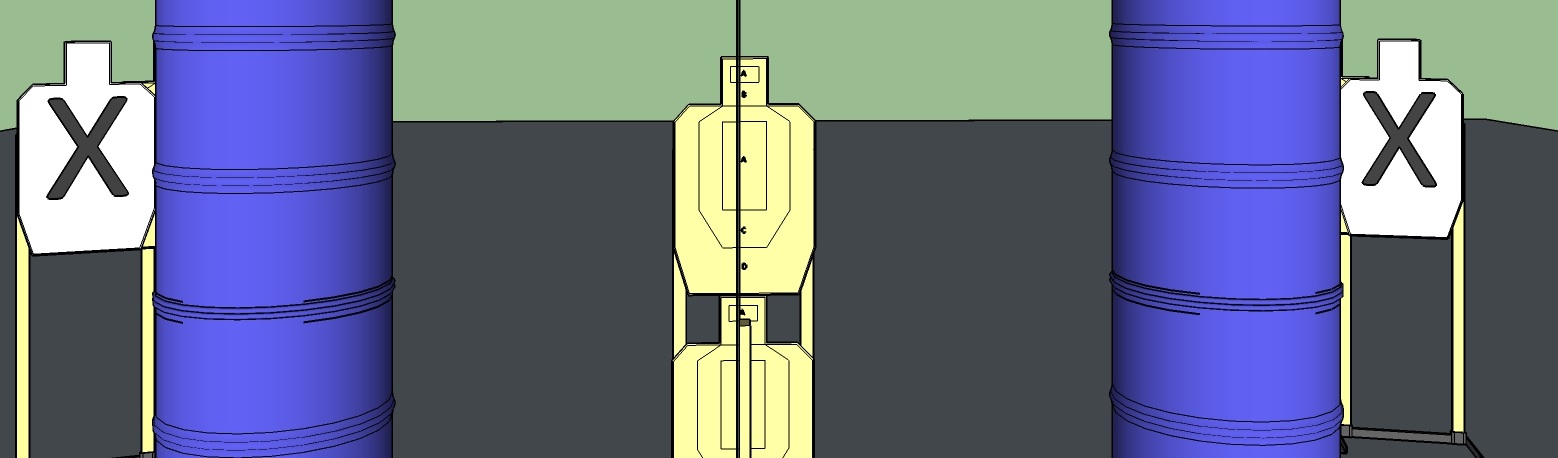
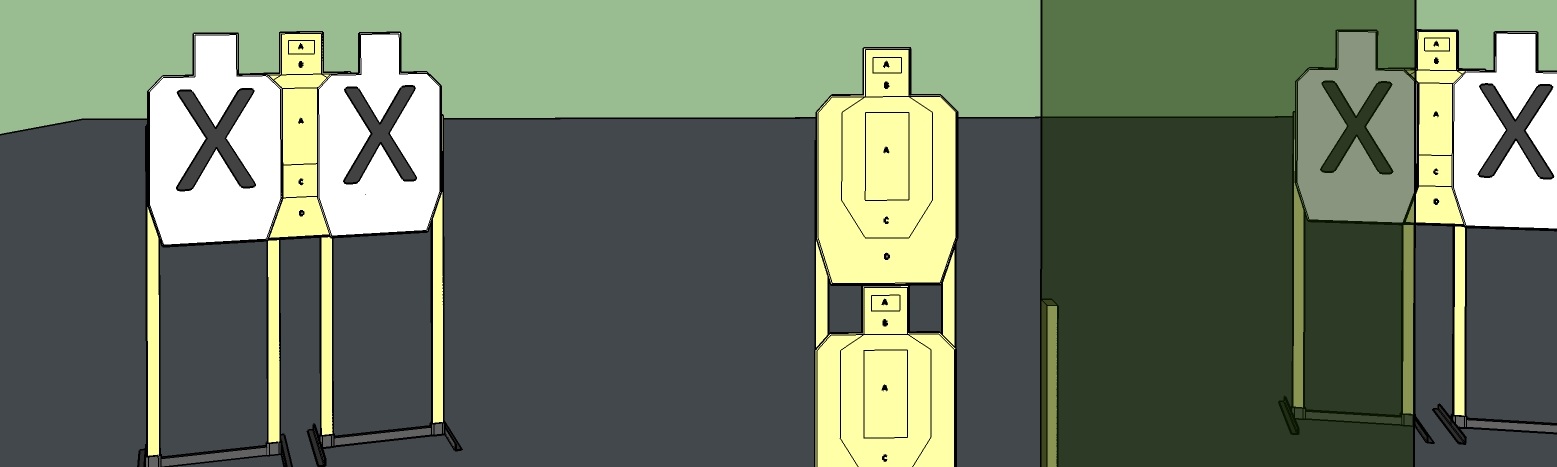
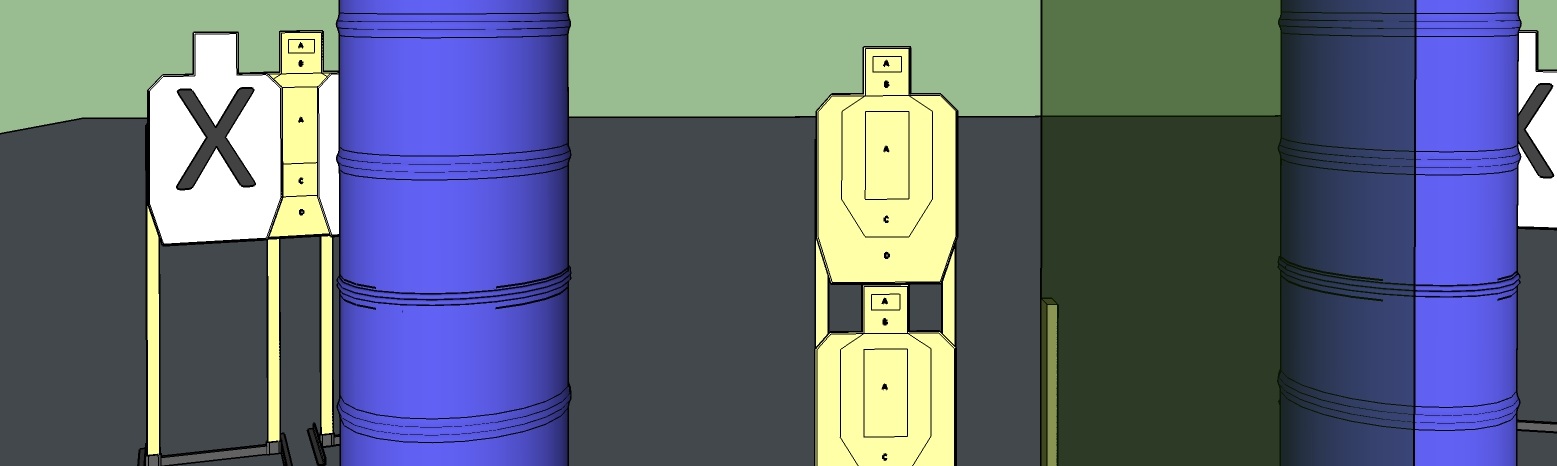
Now we are basically forcing the competitor to use 2 locations to engage all the targets on the stage. Which means we are satisfying the “nor allow a competitor to shoot all targets in the course of fire from any single location or view” part of the rule.
And since the 2 stacked targets in the center are available from both locations/views, we also are meeting the requirement of “must not require more than 8 scoring hits from any single location or view”. Yes, a competitor can choose to take 9 shots from one location/view, but 9 shots are not required because the center targets are available from both views and locations. This stage allows low capacity divisions to do a reload between locations and avoid a standing reload.
Next week we will discuss location and view in relation to longer courses of fire.